
With the rise of electric vehicles (EVs), many company directors and employees charge their cars at home.
Author Archive: Muhammad Zia

Is your business environmentally sustainable? Why going green can improve your bottom line
For business owners, sustainability might have been something viewed as a nice-to-have or a PR exercise in the past, but because the regulatory landscape is changing fast, businesses that do not get ahead of these changes risk being left behind.

Double cab pickups – How long will they be taxed as vans and when will they switch to car tax rules?
For years, double cab pickups have benefited from being classified as goods vehicles for tax purposes, allowing businesses to enjoy lower benefit-in-kind (BIK) rates.

HMRC’s bookkeeping shake-up: New rules for 2025 and beyond!
As the 2025/26 tax year approaches, it brings several significant changes to HM Revenue & Customs’ (HMRC’s) rules that will impact your business operations, financial reporting, and tax management.
Here is a quick rundown of the new rules that are planned for 2025 and beyond:
Basis period reform:
- Fully implemented by 2025, this reform changes how self-employed individuals and partnerships calculate taxable profits, aligning tax years with accounting periods. This change is complex, and it is best to seek professional advice if you have been affected.
New data collection requirements:
- From the 2025/2026 tax year, HMRC will require additional information via Income Tax Self-Assessment and real-time returns, impacting:
- Detailed reporting of employee hours through real-time information Pay As You Earn (PAYE) reporting.
- Separate reporting of dividend income and shareholding for shareholders in owner-managed businesses.
- Start and end dates of self-employment on Self-Assessment tax returns.
Making tax digital for Income Tax Self-Assessment:
- This will require businesses and landlords with qualifying income to maintain digital records and update HMRC each quarter using compatible software. Beginning in April 2026 for businesses and landlords earning over £50,000 and extending to those with income over £30,000 in April 2027.
VAT registration threshold increase:
- As a reminder, the threshold for VAT registration has risen from £85,000 to £90,000, easing the VAT-related burden of small businesses.
- It is also important to note that you must register for VAT if you expect that your annual total taxable turnover is going to go over the £90,000 threshold.
To navigate these changes with ease, speak to one of our tax advisers who will be able to assess how the new changes will impact you specifically.
They will also be able to ensure your accounting software is compatible with Making Tax Digital (MTD) requirements.
If you are unsure about the new legislation, get in touch with one of our tax advisers.

Confusion on savings interest – HMRC weighs in
HM Revenue & Customs (HMRC) has clarified that if your earnings from interest exceed £10,000, tax may apply depending on the account type.
This clarification came when a customer reached out to the tax authority on X to see if they needed to file a tax return after earning more than £2,000 in interest.
HMRC explained that if interest exceeds £10,000, a Self-Assessment tax return should be prepared and submitted within the usual deadlines, to calculate whether any tax is due.
Tax-free options for saving
Interest earned from individual savings accounts (ISAs) and some National Savings Investments (NS&I) accounts is tax-free.
For example, taxpayers can save £20,000 annually in ISAs without paying tax on the amount deposited or any interest, income or capital gains from investments in an ISA.
All savers also benefit from the Personal Savings Allowance (PSA), which allows you to earn up to £1,000 of interest before you pay tax depending on your marginal rate.
| Income Tax band | Personal Savings Allowance |
| Basic rate | £1,000 |
| Higher rate | £500 |
| Additional rate | £0 |
To avoid unexpected tax liabilities, you must be aware of these thresholds and account types to make use of the tax-free allowances available to you.
Seeking the help of a tax advisor is the best way to ensure you are making informed decisions to maximise your savings.
Get in touch if you need further clarity or guidance on whether you need to pay tax on savings interest.

Become an eco-conscious business – Taking advantage of Climate Change Agreements
Taking advantage of green tax reliefs is a good way to reduce how much Climate Change Levy tax (CCL) your business pays.
To get these reliefs, your business will need to operate in a more environmentally friendly way.
Any business in the industrial, public services, commercial and agricultural sectors is subject to the CCL Tax.
It is charged on ‘taxable communities’ for heating, lighting and power purposes. It is not charged on road fuel and other oils that are already subject to excise duty.
You may get relief from some taxes, for example, if:
- You use a lot of energy because of the nature of your business
- You are a small business that does not use much energy
- You buy energy-efficient technology for your business
Meanwhile, meeting the following requirements may exempt you from paying the CCL:
- Your business uses small amounts of energy – less than 33kWh electricity and/or 145kWh gas a day
- You are a domestic energy user – energy is used in homes, schools, caravans and self-catering accommodation
- You are a charity involved with non-commercial activities
How can my business reduce the CCL it is eligible to pay?
For eligible companies that do pay the CCL, it is possible to pay a reduced main rate if you enter a Climate Change Agreement (CCA) with the Environment Agency.
Paying a reduced rate means you will be required to improve your business’s energy efficiency and lower your average energy consumption.
Those businesses bound by a CCA will receive a reduction of 90 per cent in the CCL rate paid on electricity bills and a 65 per cent reduction on all other fuels.
You will also have to measure and report your business’s energy use and carbon dioxide emissions against targets set over two-year terms.
If you meet the targets set at the end of each term, you will continue to receive a CCL discount.
To find out how to make the most of green tax reliefs, get in touch with one of our advisers.
What are the risks with directors’ loans?
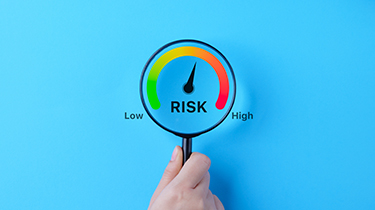
A director’s loan is money taken out of a company by a director that is not a salary, dividend, expense reimbursement or money that has previously been paid into or loaned to the company.
A record of money borrowed or paid into the company must be kept – usually known as a director’s loan account – and this money must be repaid to the company or properly accounted for within a set timeframe.
Misusing directors’ loans can lead to financial penalties, breach of fiduciary duties, legal issues, and unwanted scrutiny from HM Revenue & Customs (HMRC).
If you have used a director’s loan, here is what you need to watch out for:
- Section 455 tax charges – If loans are not repaid within nine months of the financial year-end, your company faces a tax charge of 33.75 per cent on the outstanding balance.
- Personal tax implications – Unrepaid or forgiven loans may be treated as personal income, resulting in additional Income Tax and National Insurance (NI) liabilities.
- Benefit in Kind (BIK) – Loans exceeding £10,000 or offered at below-market interest rates may trigger taxation linked to Benefit in Kind (BIK). Therefore, the company must submit the P11D to HMRC and give a copy to the director.
- Administrative penalties – Failing to record or report loans accurately in your accounts or tax returns could result in fines and further investigation.
In addition to fines, consistently overdrawn accounts or mismanagement can tarnish your company’s financial credibility, especially if it draws additional HMRC scrutiny.
Remember, acting against the interests of your company may also constitute a breach of your fiduciary duties as a director.
If this is the case, the company is entitled to seek equitable compensation from any director whose breach of these duties results in a loss.
How to stay compliant
To stay compliant, you must maintain clear records and follow the rules associated with directors’ loans.
If you are unsure how to handle directors’ loans effectively, it is best to seek professional advice.
Need help managing your directors’ loans? Get in touch with our expert advisers.

Is 2025 your year to incorporate? Here are our top tips
Nearly 900,000 companies were incorporated in 2024 – an 11.2 per cent increase compared to 2023. More entrepreneurs are recognising the benefits of limited companies.
The advantages of limited companies include limited personal liability, mitigated taxation and greater exposure to investment opportunities.
To help you start your journey towards limited company status, here are our top tips:
Research
Taking the first steps towards incorporation should not be taken lightly. Whilst it limits liability if things go wrong, it does come with some strict compliance requirements in regard to regular reporting to Companies House, which you need to prepare for.
Paying yourself
As a director, you can pay yourself via salary, dividends, or both to maximise your take-home pay.
The most efficient approach is often to pay yourself a lower salary, so you are not liable for Income Tax or National Insurance Contributions (NICs), but still contribute enough towards your state pension, and take the rest as dividends, which is subject to a lower tax rate.
Be aware that it may not always be possible to pay a dividend if your profits aren’t sufficient.
Structuring your company
When considering the distribution and management of share rights in a limited company, seeral key aspects must be carefully planned and managed. You will need to define how dividends are paid, voting rights and share structure.
At this stage, you may also need to discuss a future exit, including transfer, drag-along and tag-along rights.
As part of this process, you will need to address how the shares and shareholder rights align with the company’s Articles of Association.
Open a business bank account
Open a separate bank account for your business as soon as possible. Some founders make the mistake of thinking they can mix personal and business finances at the beginning, but it makes applying for reliefs and paying taxes more complicated as you have to declare what each transaction is for and when it was made.
Treat your business like a separate entity (because it is)
If you plan to inject personal funds into your company or take money out, do it properly through a Director’s Loan Account.
Make sure to detail each transaction going in and out of the business and never take out excessive amounts of money, as this can attract attention from HM Revenue & Customs (HMRC) and lead to fines.
If you are considering incorporation, you should seek professional advice and ongoing support to reduce the potential for errors and non-compliance with Companies House regulations.
Ready to take the next step? Contact us today for expert advice on incorporating your business.

Smart pricing strategies – Protect your business without losing customers
More than half of UK businesses plan to raise their prices in the next three months, according to the British Chambers of Commerce (BCC).

Directors’ loan accounts: How Section 455 impacts you
Directors’ loan accounts (DLAs) are a common financial tool for owner-managed businesses.