
Our top tips for hiring your first employee

There has been a surge in new company formations in the last few years, as entrepreneurs develop new and exciting business ideas and bring them to market.

On top of this, there are a growing number of workers with ‘side hustles’, who are quickly scaling up their operations to deal with demand from their customers and clients.

While many businesses may initially rely solely on the work of their founder, there comes a time when operations grow so much that they need to consider hiring their first employee.

Hiring your first employee will lighten the workload, but it also brings with it new tax and payroll requirements.

If you have previously been one of the 4.2 million businesses in the UK with no employees, other than yourself, and you are looking to bring in a new worker here are our top tips to get you started.

Inform HM Revenue & Customs

Before you can hire someone, you need to register as an employer with HMRC. Doing so will provide you with an employer PAYE reference number so you can manage your payroll.

This must be done within four weeks of your new employee’s first payday. The registration process is fairly quick, but receipt of your reference number can take up to five working days, so you must factor this in.

Set up effective payroll processes

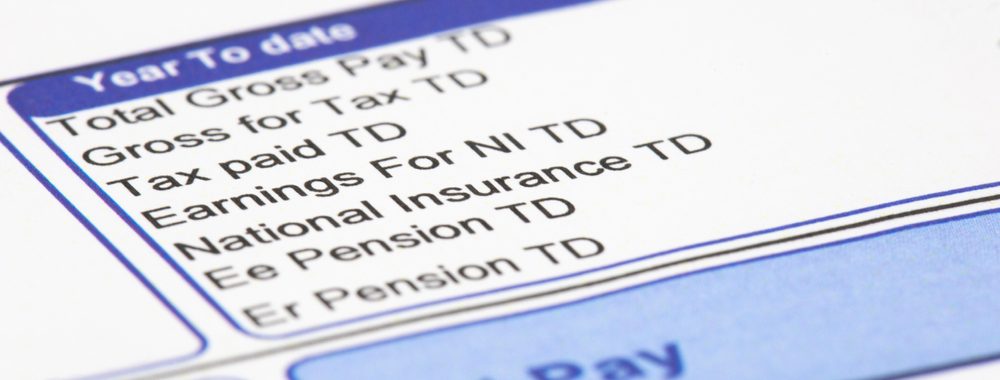
You will need to manage your payroll online each month, report this information to HMRC and make the correct payments of tax and National Insurance, as well as paying into any benefit schemes or pensions offered to your employees.

As such you will need to implement processes and payroll software systems that allow you to do this.

You may already have existing systems in place that manage your personal payroll, but you should consider whether these are still sufficient when you hire your first employee.

Don’t forget, you may also need to deduct student loan repayments, pension contributions, Payroll Giving donations and child maintenance payments.

The weekly or monthly administration of your payroll can be time-consuming and is often complicated by regular changes to the rules surrounding pay, which is why many businesses choose to have their accountant manage it for them.

Create a basic workplace pension scheme

If any of the workers you hire are eligible for a workplace pension you will need to set up and manage a scheme for them.

You must automatically enrol your staff into a pension scheme and make contributions to their pensions if all of the following criteria apply:

  • They are classed as a ‘worker’
  • They are aged between 22 and the State Pension age
  • They earn at least £10,000 per year
  • They usually (‘ordinarily’) work in the UK.

You will also need to calculate and make an employer’s contribution of at least three per cent each month to the scheme and ensure that an overall minimum contribution of eight per cent is made.

The additional five per cent is usually made up of an employee contribution, but both you and an employee can offer to contribute more should you wish to.

Your employees can choose to opt out and leave the scheme, but you will still need to re-enrol them every three years.

Paying the National Minimum Wage

You are legally required to pay your employees at least the correct National Minimum Wage (NMW) or National Living Wage (NLW) for those aged 23 and above. Failing to do so could result in you being fined and publicly named and shamed.

The current NMW rates, as of April 2022, are as follows:

Be careful if you make deductions from pay, other than for tax, National Insurance or a small number of other exceptions, as these cannot normally reduce a worker’s pay below the National Minimum Wage – even if they agree to it.

Many employers have previously been caught out by this, as well as other important changes, such as a person’s birthday where it carries them into the next NMW band.

Protect your business

Although not directly related to tax or pay, businesses should take steps to protect their interests. This includes ensuring the new staff member has the correct legal status to work in the UK, producing clear, written employment contracts and policies, and taking out employer’s liability insurance in case of accident or injury at work.

Failing to take these steps could leave your business exposed to costly risks, including fines and potential compensation payments.

Seek help

These are only a few of the steps that you as a prospective or new employer may need to take and it is well worth seeking payroll and HR advice before hiring your first employee, both to protect yourself and to take away the administrative burden.

Link: Becoming an employer for the first time? What you need to know

Revenue updates guidance on tipping apps

When HM Revenue & Customs’ (HMRC’s) current guidance on the tax treatment of tips and troncs was first published back in 2014, tips and troncs were paid almost exclusively in cash or through card transactions.

Of course, in the eight years since, things have changed dramatically and payments are frequently made via app-based platforms, whether for delivery drivers or waiting staff.

Now, HMRC has updated its guidance to take account of these changes and clarify the tax position that applies to different arrangements.

Importantly, the new guidance does not change the tax status of payments made through app-based platforms. Instead, it offers further clarification of the position and its application in various circumstances.

The two key takeaways are:

  • Tips and troncs passed from an app to an employer without an independent troncmaster are subject to National Insurance and PAYE, even if they are intended by the customer to be passed to a specific member of staff.
  • Tips paid directly by third-party apps to employees are not subject to National Insurance and PAYE. The onus is on employees to notify HMRC of this income.

App-based tipping arrangements can be set up in many different ways, with seemingly small variations in how they’re operated having sometimes significant impacts on the tax positions of employers and employees alike.

It is crucial not to make assumptions about the tax status of any app-based set-up you are using as errors can lead to HMRC inquiries and potentially hefty penalties.

Ports consider legal action after border controls delayed again

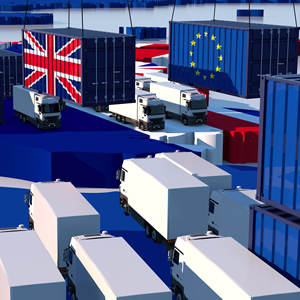
Further delays on border controls at UK ports caused by Brexit have led to some of the country’s biggest ports threatening to sue the Government.

According to the Guardian newspaper, they are considering legal action to recover the costs of building border control posts they fear will never be used, after confirmation that post-Brexit import checks will be delayed for the fourth time.

Brexit Opportunities Minister, Jacob Rees-Mogg, announced that after being delayed three times, physical checks on fresh food and plants from the EU, which were due to begin in July, have been pushed back to the end of 2023.

New strategy in the autumn

According to the news website, he announced plans to digitise all checks and paperwork at the border, with a new strategy published in the autumn.

The decision means that the UK will effectively continue to rely on the EU to monitor food and plant safety. Food producers said they were being placed at a disadvantage compared with European competitors who would have less red tape to deal with.

The British Ports Association (BPA), a lobby group for the industry, said it was concerned the expensive border posts, subsidised with nearly £200m from the taxpayer, may never be used.

‘White elephants’ claim

Richard Ballantyne, the BPA’s Chief Executive, said ports had rushed to get infrastructure ready on time: “This announcement is a major policy change, meaning the facilities will effectively become white elephants, wasting millions of pounds of public and private funding”.

Checks on meat were due to start on 1 July and on dairy on 1 September, with all remaining goods including fish and composite foods to be subject to checks from 1 November. A date for controls on live animals has yet to be agreed.

The operator of Eurotunnel, through which a quarter of all trade between the UK and EU passes, welcomed the announcement.

‘Question of fairness’

“We would have had to check more certificates, more declarations, and would not have been able to board trucks which didn’t have the right paperwork to go with the goods,” said John Keefe, director of public affairs at Getlink.

However, the National Farmers’ Union called the move “unacceptable” and said it was another blow for British food producers, as they grapple with soaring costs.

“This is a question of fairness,” said NFU’s President, Minette Batters, calling import controls crucial “to the nation’s biosecurity, animal health and food safety”.

The British Veterinary Association also criticised the move, saying it “flies in the face not only of common sense, but also of the government’s commitment to preserving high levels of animal and human health in the UK”.

For help and advice with Brexit related matters, please get in touch with our expert team today.

What impact are Brexit rules having on EU-UK trade?

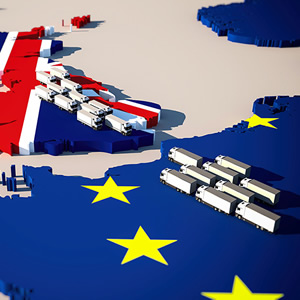
Businesses have had to get to grips with many changes to trade with the EU in the post-Brexit era and a new study has suggested that new rules introduced last year have caused a “major shock” to UK-EU trade.

According to the latest LSE Centre for Economic Performance study, imports from the EU to the UK fell by a quarter relative to those from elsewhere in 2021.

The LSE analysed trade patterns of around 1,200 products between the UK and the continent and also found that there had been a “sharp drop” in the number of relationships between UK exporters and EU importers.

The researchers have said that the findings are surprising given the fact that the UK has delayed the introduction of many customs checks on EU goods until this year.

Exports to the EU are recovering, but the study team said that much of this was down to an increase in sales of costly machinery.

When looking at the wider variety of goods sold to the EU, this was in decline by up to 30 per cent, with research suggesting that the administration of the new rules made it less attractive for smaller businesses to sell low-value items in European markets.

Thomas Prayer of the LSE said: “It appears the UK simply stopped selling a lot of products to smaller countries in the EU.”

What new challenges has Brexit created?

Having reviewed the various factors behind the decline in trade, the LSE researchers pointed at three primary factors limiting trade:

  • Additional red tape
  • New customs controls
  • Taxes and tariffs hitting European businesses hard.

Could things get worse for EU-UK trade?

At the moment full border checks have still not been implemented and these remain delayed until July at the moment.

There are already rumours growing that this final set of border checks may be delayed further in the months ahead to support trade and prevent a sudden surge of additional costs and administration.

However, given the main trade barriers appear to be the controls and costs and work involved in checks and red tape there are clear fears about the volume of exports between the UK and EU in future.

Nevertheless, the EU remains a close trading partner with the UK and many opportunities still exist for businesses to enter new markets on the continent with the right support and advice.

Setting up in the EU – An alternative solution to Brexit trade challenges?

Many businesses are still trying to get to grips with the new and changing EU-UK trade rules more than two years on from Brexit.

However, a growing number of UK companies are trying an alternative approach – setting up in the EU.

Prior to Brexit, this suggestion was touted by a number of different businesses as a means of getting around the complex trade rules and requirements.

Now new data from the government agency, Invest in Holland, shows that more than 90 investors have built or rented distribution space to British firms since 2017 – half of this activity took place in the last year alone.

The benefits of creating an EU hub

While trade relations between the EU and UK have, in most cases, improved to some degree since the initial impact of Brexit there are still challenges that persist, which can be complex and costly.

Setting up a distribution hub or  subsidiary business in the EU could help UK businesses to enjoy:

Freer trade – If a company can declare that they are an EU company it can enjoy the benefits of EU membership, including free trade. Any goods or services that they move between member states will be tariff-free and frictionless. However, if they transfer goods and services between the UK and the EU, they will still be subject to the changes associated with Brexit.

Less bureaucracy – Providing goods or services from the EU to other EU member states means that businesses face less red tape, which can help to speed up sales and delivery processes.

Local knowledge – Although the EU and UK remain aligned in many ways still, having a hub within the EU can provide access to EU workers who have a better knowledge of local markets and trading requirements.

Lower costs – Although setting up a base or hub in the EU may initially seem costly, it may prove to be more cost-effective as it eliminates some of the cost of transport and the complications brought on by the new trade arrangements.

Greater growth – Creating a new base in an EU country might also help a business to expand into new markets quicker than before and be a driver for growth overseas.

How to set up a company in the EU

Most companies who plan to expand their business with an EU hub or subsidiary do so as a European company or SE (Societas Europea).

This is a public limited liability company that allows your business to operate under a single European brand name across multiple member states while following a single set of rules.

To set up an SE company, you should:

  • Locate your registered office and your head office in the same EU country.
  • Have a subscribed capital of at least €120,000.
  • Have a presence in at least two EU countries.

In some cases, certain EU member states have additional requirements for an SE company, so it is important that you check this beforehand.

If you don’t meet the eligibility criteria or do not think this approach is right for you, you could choose to set up individual companies in different member states.

As the establishment of an overseas company or subsidiary could have an impact on the finances and tax position of your UK company it is important to seek advice from an experienced accountant beforehand.

To find out how we can help you establish new hubs overseas or advise you on other approaches to improve trade with the EU, please contact us.