Survey shows taxpayers are still unprepared for Making Tax Digital switchover

A new survey on Making Tax Digital (MTD) shows taxpayers have an alarming lack of readiness and enthusiasm for the changeover and a lack of awareness that MTD for Income Tax begins in less than two years.

HM Revenue & Customs (HMRC) commissioned pollsters Ipsos to undertake new research to explore the preparedness of Income Tax Self-Assessment (ITSA) customers, in the lead-up to the MTD switch in April 2024.

Lack of understanding of a big problem

The latest survey came after earlier research found half of the businesses did not understand their reporting obligations under the extension of Making Tax Digital for VAT, even in January of this year.

Understanding of the specific requirements of Making Tax Digital was lower than general awareness.

In fact, only over half of those surveyed (51 per cent) were aware of MTD and knew of at least one requirement, but alarmingly, 12 per cent provided no correct responses on requirements and nearly four in 10 (37 per cent) could not identify any requirements at all.

The survey had some surprising findings. It found:

  • Around four in 10 said they would find it difficult to start reporting quarterly income tax when the rules come in.
  • Using compatible software was a problem for 35 per cent of respondents.
  • 40 per cent said the switch would be easy and they recognised the benefits of the change.

The lack of experience with MTD software was highlighted as a big problem.

A big majority (86 per cent) of those facing MTD for ITSA had turnover, property income or combined turnover and property income below the VAT threshold, therefore, they had no previous experience of using the software.

How will landlords be affected?

Unincorporated businesses and landlords with annual turnover or gross income above £10,000 will need to follow the rules for MTD for Income Tax Self-Assessment (ITSA) from their next accounting period starting on or after 6 April 2024.

But according to the survey, landlords, particularly those with one or two properties, spent minimal time and effort on their obligations and felt MTD would result in more time and higher costs.

The report also showed that because it is a new system, taxpayers were looking for leniency when submitting their first returns, particularly if previously they had a long history of submitting correct and punctual annual tax returns.

More clarity is needed from HMRC

Andrew Jackson, Vice-Chair of the joint CIOT and ATT digitalisation and agent services committee, said: “We have encouraged HMRC to publish more detailed guidance about the Making Tax Digital process, as there are seemingly more questions than answers at the moment. HMRC must spell out what they are going to do to improve awareness and bring out all the necessary guidance they can urgently.”

Link: Landlords not aware of Making Tax Digital for income tax

The benefits of taking on an apprentice

With the current labour shortage affecting pretty much all areas of the economy, taking on an apprentice could reap rewards for many businesses.

There are many reasons why hiring an apprentice can benefit your business, but for hard-pressed employers, with a limited budget, the financial incentives offered by the Government are a major reason to take the plunge.

Why take on an apprentice?

Benefits include:

  • Plugging the skills gap: It is obvious that if a business has a skills shortage, training an apprentice in that area will reap rewards.
  • Gaining a new perspective on technology: This will allow businesses to equip their workforce with specialist skills and the latest techniques.
  • Enhance reputation as an employer: Giving young or underskilled workers an opportunity in this way can only enhance a firm’s reputation and give something back to the community.
  • Generating a boost in productivity: Training helps staff become more proficient, but an apprentice can also free up time for more senior staff to focus on key areas of their work.

However, perhaps the best part of apprenticeships is the financial assistance available from the Government, which will provide funding to pay for an apprentice’s training and assessment.

Where you get the funding from depends on where you are in the UK. The amount you get also depends on whether you pay the Apprenticeship Levy or not.

Who needs to pay Apprenticeship Levy?

The Apprenticeship Levy is an amount paid at a rate of 0.5 per cent of an employer’s annual pay bill.

As an employer, you have to pay Apprenticeship Levy each month if you have an annual pay bill of more than £3 million or are connected to any companies or charities, for Employment Allowance purposes, that have a combined annual pay bill of more than £3 million.

How is the funding distributed?

For those who do not pay the levy, you will have to pay five per cent towards training fees and you need to agree on a payment schedule with the training provider.

The Government will then pay the other 95 per cent up to a maximum funding band and deliver it directly to the training provider.

What else is available?

You can get £1,000 to support your apprentice in the workplace if they are one of the following:

  • 16 to 18 years old
  • 19 to 25 years old with an education, health and care plan
  • 19 to 25 years old and they used to be in care

The training provider will present the payment over two instalments of £500 each, with the first payment after 90 days and the second after a year on the scheme.

The current National Minimum Wage rate for an apprentice is £4.81 per hour if they are aged:

  • 16 to 19
  • 19 or over and in their first year

If an apprentice is aged 19 or over and has completed their first year, they must be paid the National Minimum Wage or National Living Wage rate relevant to their age.

Link: Apprenticeship Funding

Be prepared if you decide to adopt a working from home policy

There seems little doubt now that the working from home phenomenon has become established.

With a laptop, a phone and an internet connection, many tasks can be performed as adequately at home or elsewhere, as in an office.

While returning to the office is a must for many, the recent rail strikes and surge in fuel prices have shown that this kind of flexibility can keep the wheels of industry in the UK turning when businesses and their staff are disrupted.

Usually, this takes a hybrid form with a few days in the office and a couple working from home, or vice versa.

Although many businesses are already implementing this new way of working, there are things that business owners themselves should consider, especially where they intend to operate a business out of their home.

Get advice before taking the plunge

If you decide to run your business from home, some rules and regulations need to be followed.

  • You may need permission from the local council, a landlord or a mortgage provider to run your business
  • Health and safety issues will also have to be properly managed
  • You may need separate insurance.

Planning permission

If you are planning on making alterations to accommodate your business, you may need permission from the council.

You may also need a licence if your business is likely to cause disruption with deliveries and visitors, or if you want to advertise outside your home.

What tax allowances can you claim?

You can include your business costs in your Self-Assessment tax return if you’re a sole trader or part of a business partnership and you can also claim a proportion of the cost of things like council tax, heating, lighting, phone calls and broadband.

Capital Gains Tax

You may have to pay this on the part of your property you used for your business if you sell your home in future, so be aware.

Business rates

You may have to pay business rates on the part of your property that you use for your business, while you’ll still have to pay Council Tax on the rest of your property.

But you may qualify for small business rate relief if your property has a rateable value of £12,000 or less.

Supporting employees in their own homes

Many employees are also enjoying the benefits of WFH, either full-time or under a hybrid system.

As an employer, you must support them as well. For employees, the work-from-home relief, which many claimed during the pandemic, is still available.

However, from 6 April 2022 onwards it is only open to employees where an employer specifically requires a staff member to work from home – for example, to stop the spread of Covid or because the job had been ‘relocated’ and was now contractually regarded 100 per cent as a home-working role.

For basic-rate taxpayers, the relief is worth 20 per cent of the £6 allowance –  £1.20 a week – while for higher-rate taxpayers they could claim 40 per cent of the £6 – £2.40 a week.

Over the year, this means that employees can reduce their tax bill by between £62.40 and £124.80 respectively.

For some employees, relief may also be available on:

  • Reimbursement by employers for additional household expenses
  • Provision of office equipment by employers
  • Provision of computers for private use by employers
  • Travel for necessary attendance.

If you need help and advice on managing your business as it makes further moves to work from home, please seek advice.

Link: Working From Home

How to minimise Inheritance Tax bills as house prices surge

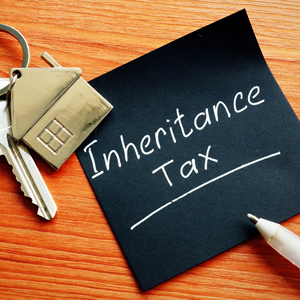
More and more people are being drawn into paying Inheritance Tax (IHT), as the price of property soars.

This is because former Chancellor Rishi Sunak froze the nil rate thresholds for paying the tax at £325,000 until 2026, while the value of homes has rocketed, potentially drawing more people into paying the tax.

There are some exceptions, which are listed below, but generally, people are then faced with paying 40 per cent IHT on anything gained over the £325,000 figure.

How much do I have to pay?

IHT is levied at 40 per cent on everything in an individual’s estate at their death above the Nil Rate Band of £325,000.

However, many taxpayers also benefit from the Residence Nil Rate Band, which adds an additional allowance of £175,000 for their main property if it is passed to direct descendants.

If you are married or in a civil partnership these allowances can be passed to a spouse or partner once the other person dies.

According to the Office for National Statistics (ONS), in 2009, the average price of a home in the UK was £227,000. In 2021 that had rocketed to £327,000, £2,000 above the initial Nil-Rate band.

In high-value areas, such as the South East and London, this figure is even higher and it means that more and more taxpayers – and not just the wealthiest members of society – are facing IHT bills on their estates after death.

What is IHT?

Inheritance Tax is a tax on the estate (the property, money and possessions) of someone who’s died.

As mentioned, there is normally no Inheritance Tax to pay if:

  • The value of your estate is below the £325,000 threshold
  • You leave everything above the £325,000 threshold to your spouse, civil partner, a charity or a community amateur sports club
  • If you give away your home to your children (including adopted, foster or stepchildren) or grandchildren your threshold can increase to £500,000
  • If you are married or in a civil partnership and your estate is worth less than your threshold, any unused threshold can be added to your partner’s threshold when you die.

This means their threshold can be as much as £1 million!

What are the rates for IHT?

The standard IHT rate is 40 per cent. However, this is only charged on the part of your estate that is above the threshold.

So, if your estate is worth £600,000 and your tax-free threshold is £500,000. The Inheritance Tax charged will be 40 per cent of £100,000 or £40,000.

The estate can pay IHT at a reduced rate of 36 per cent on some assets if you leave 10 per cent or more of the ‘net value’ to charity in your Will.

Are there any ways to save on IHT?

Here are some of the ways that you can cut your IHT bill with careful planning:

Gifting

There’s usually no IHT to pay on small gifts you make out of your normal income, such as Christmas or birthday presents, which are commonly referred to as ‘exempted gifts’.

There is also no IHT to pay on gifts between spouses or civil partners and you can transfer as you like during your lifetime, as long as they live in the UK permanently.

However, other gifts count towards the value of your estate, and you could be charged IHT if you give away more than £325,000 in the seven years before your death.

Gifts include anything that has value, or anything transferred at a loss to a family member, such as the sale of a home to a descendant for less than it is worth.

However, you can give away £3,000 worth of gifts each tax year without them being added to the value of your estate thanks to the ‘annual exemption’.

If you have any unused annual exemption, you can carry it forward to the next year – but only for one year.

Each tax year, you can also give away additional gifts if they relate to special events such as weddings, birthdays or Christmas, or if they support the living costs of another person, such as an elderly relative or a child under 18.

You can give as many gifts of up to £250 per person as you want during the tax year as long as you have not used another exemption on the same person.

If there is IHT to pay, it’s charged at 40 per cent on gifts given in the three years before you die. Gifts made three to seven years before your death are taxed on a sliding scale known as ‘taper relief’. After seven years the gift will be IHT-free.

Business Property Relief or Agricultural Property Relief

Certain assets receive relief from IHT, these include Business Property, Agricultural Property and Heritage Assets.

These reliefs can reduce or eliminate the value of an asset being included within an estate, but they often rely on certain conditions being met.

However, not every interest in a business will qualify for these specialist reliefs so it is worth seeking specialist professional advice when managing your estate.

Charity

Anything left to charity in your Will won’t count towards the total taxable value of your estate. Known as a ‘charitable legacy’, this will also reduce the IHT rate on the rest of your estate from 40 per cent to 36 per cent, as long as you leave at least 10 per cent to charity.

Trusts

Trusts can play a role in reducing a family’s exposure to IHT so that more can be passed on to future generations, but they say they can also help look after family assets and provide for family members who are too young or vulnerable to deal with financial matters.

A trust is a legal arrangement where you gift cash, property or investments to a separate entity (the trust). One who gifts assets is the Settlor, the trustees then oversee the management of the assets for the benefit of a third party or parties.

One of the main benefits of a trust is that, should you elect to act as the trustee, you would continue to maintain control over the assets gifted whilst your estate’s exposure to IHT is reduced as, after seven years, the gift is out of the Settlor’s estate completely.

Assets transferred into a trust are no longer considered as belonging to the Settlor, so they are taxed according to the rules governing the trustee.

Many people would prefer to provide for a beneficiary through a trust as opposed to passing assets to them outright. This could involve a source of income for a beneficiary for life, or providing education for children but not allowing them to access funds until they are older.


‘Umbrella’ contracts firm loses £11m tribunal case against HMRC

A company has lost an £11 million dispute with the taxman over whether contract construction workers were entitled to claim travel costs tax-free.

As many as 600,000 temporary workers in the UK are thought to be employed by umbrella companies, used by recruitment agencies and companies to cut temporary payroll costs.

Exchequer Solutions Limited (ESL) is an umbrella company that supplies workers to the building trade and the dispute with HM Revenue & Customs (HMRC) was over whether their workplace was permanent or temporary.

The dispute

The issue revolved around whether ESL employed the workers under the umbrella contract of employment continuously while working on various projects, or whether there was a series of separate contracts, with gaps between the employment, where a worker might be temporarily employed elsewhere.

The appeal against HMRC at the First-Tier Tribunal raised the question of whether workers should be reimbursed for travel and subsistence expenses, without being subject to tax or National Insurance contributions (NIC).

What is an overarching contract?

If there is an overarching or umbrella contract of employment, each place of work is a temporary workplace, and the expenses can be paid tax-free.

However, if there is a separate employment contract for each assignment, the workplace is a permanent workplace, and any payments came within the scope of tax and possibly NIC.

HMRC argued that there was no overarching contract of employment so the payments relating to expenses were subject to PAYE income tax and NIC.

The relevant tax years were 2013/14 through to 2016/17 and HMRC issued determinations amounting to a total of £11 million in unpaid taxes and NICs.

ESL claimed there was an overarching or umbrella contract and appealed against the Regulation 80 Determinations and the NIC Notice of Decision.

Following detailed arguments from both, the judge ruled against ESL’s argument.

In conclusion, the Judge determined that the two parties, ESL and HMRC, should agree on the amount of any liability to income tax and NIC based on the amount of the travel and subsistence expenses paid by ESL to its employees.

Deadline set for full hearing

A deadline of 30 November 2022 was set for agreement to be reached at which time a hearing would be organised to finalise the amount of any liabilities.

Link: Umbrella company loses £11m tax dispute over expenses

Britons lose millions in penalty charges as they cash in LISAs

Thousands of Britons facing a cost-of-living crunch have been withdrawing funds from their Lifetime ISA (LISA) accounts and getting hit with significant penalty charges.

According to HM Revenue & Customs (HMRC), a record 77,500 LISA savers were issued over £33 million worth of early withdrawal charges in 2021/22.

Early withdrawal from LISAs attracts a 25 per cent penalty. During the pandemic, the Treasury cut the early withdrawal charge from 25 per cent to 20 per cent to ensure those accessing their LISA, while facing serious hardship, were not unfairly penalised. However, this has now ended.

What are LISAs?

  • You can use a LISA to buy your first home or save for later life. You must be 18 or over but under 40 to open one.
  • You can put in up to £4,000 each year until you’re 50. You must make your first payment into your ISA before you’re 40.
  • The Government will add a 25 per cent bonus to your savings, up to a maximum of £1,000 per year.
  • The Lifetime ISA limit of £4,000 counts towards your annual ISA limit. This is £20,000 for the 2022/23 tax year.
  • You can hold cash or stocks and shares in your Lifetime ISA or have a combination of both.

Although the benefits of leaving LISAs untouched are considerable, they can be accessed in an emergency.

As inflation approached double figures in April, around 9,000 savers decided to accept the penalties to take their money out early.

In total, LISA savers made unauthorised withdrawals worth over £14 million, the highest figures for the year.

If you’re a first-time buyer or think you might be in the future or want to save for retirement, a LISA isn’t a straightforward savings account, and may not be right for everyone.

Expansion of the Trust Register – What you need to know

Since 6 October 2020, new rules were introduced which extend the scope of the trust register meaning that more trusts will need to register with HM Revenue & Customs (HMRC).

The trust register was introduced five years ago to make the beneficial ownership of assets held in trust more transparent.

While many trusts have had to sign up using the TRS already, the remit of the trust register is expanding to include a greater number, and type, of trusts than ever before.

What changes are being made to the Trust Register?

Since October 2020, the requirement to register using the TRS will apply not only to trusts with a tax liability but to all trusts.

This includes trusts set up many years ago, which may have been forgotten about or left dormant, but which remain extant.

The deadline for registration of non-taxable trusts has already been extended from 10 March 2022 to 1 September 2022, so time is running out!

Will your trust need to register?

If you operate a trust the answer is likely to be yes. Under the changes, only a limited number of exemptions exist.

Some other less common types of express trusts that are set up for particular purposes are also excluded from registration unless they are liable for tax.

Be aware that this change to the rules means that for the first time some offshore trusts will also need to be registered.

How do I register using the Trust Registration Service?

To comply with the registration requirements, trustees will need to input details of the settlor, trustees and beneficiaries into an online portal.

At a minimum, trustees will need to confirm annually that there have been no changes and notify via the TRS of any changes within 90 days.

Some trusts may have already completed a 41G form containing some of this information. However, HMRC has confirmed that this did not collect sufficient evidence to meet the requirements under the new rules.

Therefore, those trusts which registered separately with HMRC, must register and resubmit information via the TRS.

HMRC strongly recommends that trustees familiarise themselves with the TRS system and obtain the information required to register in advance of the deadline in September.

Need help with trust registration? Speak to our team at Rotherham Taylor Accountants.

How hard-pressed SMEs can obtain business support

Small businesses are the lifeblood of the UK economy, but with rapid inflation and other economic headwinds making trade difficult, they can struggle to access support.

There is a wide range of important tax reliefs available to SMEs, which could provide some much-needed financial assistance.

These include:

Employment Allowance claims

This scheme allows eligible businesses to reduce their National Insurance contributions (NICs) bills by claiming up to £5,000 each year of their NIC bill. This is available to employers if their Class 1 National Insurance liabilities were less than £100,000 in the previous tax year.

Super-deduction and Annual Investment Allowance

Businesses can cut their tax bill through the super deduction by up to 25p for every £1 they invest in qualifying equipment, which can include machinery, computers, most commercial vehicles and office furniture.

The temporary £1 million limit for the Annual Investment Allowance (AIA) has also been extended to the end of March‌‌‌ 2023.

The AIA allows businesses to spend up to £1 million on qualifying business equipment, and deduct in-year its full cost before calculating their taxable profits.

Business rates savings

Any tax cut is welcome, which is why the retail, hospitality and leisure sectors, should take advantage of the 50 per cent business rates cut.

The Government says this is worth £1.7 billion for up to 400,000 eligible properties.

The business rates multiplier has also been frozen for another year. This is used to calculate business rates and usually rises with inflation each year, but for the coming year has been held at 49.9p and 51.2p, depending on the type of business.

There is further relief through green technologies, where there will be no business rates from April this year and eligible heat networks will also receive 100 per cent relief.

Big discounts on digital technology

Eligible businesses can receive a 50 per cent discount on buying new software worth up to £5,000 with the Government’s Help to Grow: Digital initiative, which also offers free impartial advice and guidance on the best technology to choose.

Its sister scheme, Help to Grow: Management, is 90 per cent funded by the Government and uses UK business schools and one-to-one mentoring to deliver business expertise on everything from leadership and financial management to marketing and digital adoption.

Claimants for both schemes must:

  • Be based in the UK;
  • Have actively traded for at least a year; and
  • Have between five and 249 staff members.

Fuel duty savings for businesses

The Government has cut fuel duty on petrol and diesel by five pence per litre for 12 months.

The Government says that this represents a saving of £200 for the average van driver and £1,500 for the average haulier.

However, the reality is that many of these savings have been absorbed by fuel retailers who have continued pushing up the price at the pumps.

As a result, Boris Johnson has reportedly asked transport officials to draw up plans to target petrol stations that choose not to pass on the 5p fuel duty cut to customers.

According to reports in The Telegraph, Transport Secretary Grant Shapps has suggested a “pump watch” name-and-shame scheme, with Downing Street officials confirming that they “are considering mechanisms available to expose those companies that aren’t passing on tax benefits to consumers.”

Link: Five ways SMEs can get financial support for their business

Be prepared for changes to VAT penalties and VAT interest charges

Changes to charges and penalties applied to late submission of VAT returns will kick in from January next year.

For the VAT period starting on or after 1 January 2023, new penalties will replace the default surcharge for returns submitted or paid late.

Any VAT returns received late will also be subject to late submission penalty points and financial penalties.

What happens if I submit my VAT return late?

A new points-based system is set to be introduced for late submission penalties. For each late return, you will receive one penalty point.

Once a penalty threshold is reached, you will receive a £200 penalty and a further £200 penalty for each subsequent late submission.

The late submission penalty points threshold will vary according to your submission frequency.

How am I affected if I pay late?

Up to 15 days overdue – No penalty charge if you pay in full or agree to a payment plan on or between days one and 15.

Charge at 16 and 30 days overdue – The first penalty charge will be at two per cent on what you owe on day 15, if you pay in full, or agree to a payment plan on or between days 16 and 30.

Overdue by 31 days or more – On top of what you owe on day 15, there will be a further two per cent added to what you owe on day 30. In addition, you will incur a second penalty at a daily rate of four per cent per year for the duration of the outstanding balance.

HM Revenue & Customs (HMRC) is giving people some breathing space to familiarise themselves with the new arrangement and will not be charging a first late payment penalty for the first year from 1 January 2023 until 31 December 2023, if you pay in full within 30 days of your payment due date.

How much interest will I pay on late payments?

From next January, HMRC will charge interest on late payments from the day your payment is overdue until it is paid off in full.

The rate is the Bank of England base rate plus an additional 2.5 per cent.

More detailed guidance on VAT penalties is set to be published in December.

Link: Prepare for upcoming changes to VAT penalties and VAT interest charges

Penalties for misuse of Coronavirus Job Retention Scheme

New legislation allows HM Revenue & Customs (HMRC) to recover Coronavirus Job Retention Scheme (CJRS) grants that have been overclaimed.

Those who fall foul of the legislation could face interest charges, financial penalties and even be named and shamed.

If a business overclaimed a CJRS grant and has not repaid it, it needs to inform the tax authority within 90 days.

The new legislation allows looking for incorrect claims, but the authority says by paying back anything owed, any tax liability can be avoided.

However, firms may be penalised if they did not notify HMRC within the notification period that they were chargeable to income tax on an overclaimed CJRS grant.

If a penalty is applied, there are factors taken into consideration which include:

  • When the CJRS grants were received;
  • When it became repayable; or
  • When it became chargeable to tax because circumstances changed.

The authority can then charge a penalty of up to 100 per cent of the amount the business was not entitled to receive.

If the business was aware it was not entitled to a grant and did not disclose that within the notification period, the law says that the failure was deliberate and concealed and substantial penalties could apply.

When determining the amount involved, HMRC will make a tax assessment of the amount the business was not entitled to and have yet to repay.

Penalties and interest payments

The outstanding amount identified by the assessment must be paid within 30 days or any late charge will incur interest.

A further penalty may also apply if the bill has not been settled by 31 days after the due date.

What happens with a partnership?

If a partnership receives an overclaimed CJRS grant that it does not repay, HMRC may assess any of the partners for income tax who will be jointly and severally liable for the amount assessed.

What happens with insolvent businesses?

If a company is insolvent and HMRC cannot recover the tax it owes, company officers can become personally liable to pay the tax charged on their company’s overclaimed CJRS grants.

Naming and shaming defaulters

HMRC says that if a deliberate penalty is imposed it may publish details of the defaulter.

Link: Penalties for not telling HMRC about Coronavirus Job Retention Scheme grant overpayments